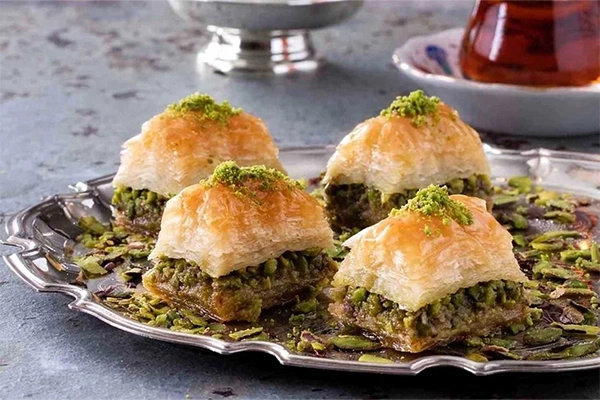
Baklava, a beloved dessert with roots in Middle Eastern and Mediterranean cuisines, has captivated taste buds for centuries. This article delves into the rich history, cultural significance, and most importantly, the perfect baklava recipe for you to try at home.
The Perfect Baklava Recipe
The key to a delicious baklava lies in its layers of flaky phyllo dough, nutty filling, and sweet syrup. Here’s a comprehensive baklava recipe that will help you create this delectable treat in your own kitchen.
Ingredients
For the pastry:
– 1 package (16 ounces) phyllo dough, thawed
– 1 cup unsalted butter, melted
– 4 cups finely chopped nuts (pistachios, walnuts, or almonds)
– 1 teaspoon ground cinnamon
– 1/4 teaspoon ground cloves
For the syrup:
– 1 cup water
– 1 cup granulated sugar
– 1/2 cup honey
– 1 tablespoon lemon juice
– 1 cinnamon stick
Preparation Steps
1. Preheat the oven to 350°F (175°C).
2. Make the syrup first: In a saucepan, combine water, sugar, honey, lemon juice, and cinnamon stick. Bring to a boil, then reduce heat and simmer for 10 minutes. Remove from heat and let cool completely.
3. Mix the chopped nuts with cinnamon and cloves in a bowl.
4. Brush a 9×13 inch baking dish with melted butter.
5. Layer 8 sheets of phyllo in the dish, brushing each sheet with butter before adding the next.
6. Sprinkle 1/3 of the nut mixture over the phyllo.
7. Repeat the layering process two more times, using 5 sheets of phyllo between each nut layer.
8. Top with the remaining phyllo sheets, brushing each with butter.
9. Cut the baklava into diamond or square shapes.
10. Bake for 45-50 minutes, until golden brown.
11. Remove from oven and immediately pour the cooled syrup over the hot baklava.
12. Let cool completely before serving.
This baklava recipe yields a perfectly balanced dessert with crispy layers, nutty flavor, and sweet syrup infusion.
Tips for Perfect Baklava
To ensure your baklava recipe turns out perfectly every time, consider these additional tips:
1. Thaw the phyllo dough properly: Leave it in the refrigerator overnight, then at room temperature for about an hour before using.
2. Keep the phyllo covered: Use a slightly damp kitchen towel to prevent the sheets from drying out while you work.
3. Use clarified butter: For an even crispier texture, consider using clarified butter (ghee) instead of regular melted butter.
4. Don’t overdo the syrup: While baklava should be sweet, too much syrup can make it soggy. Pour it slowly and evenly over the hot baklava.
5. Let it rest: Allow the baklava to rest for several hours or overnight before serving. This helps the flavors meld and the syrup to be fully absorbed.
By following these tips along with the baklava recipe, you’ll create a dessert that rivals those found in Middle Eastern bakeries.
What Is Baklava?
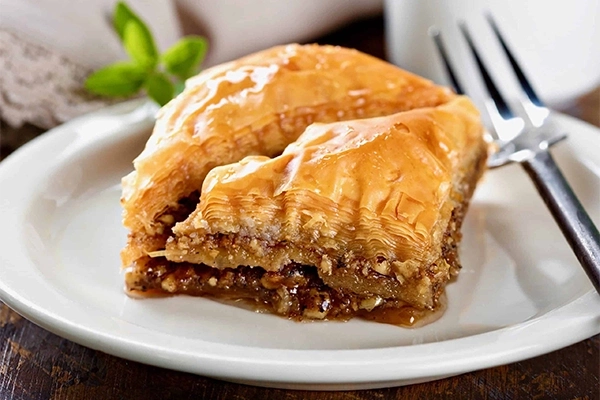
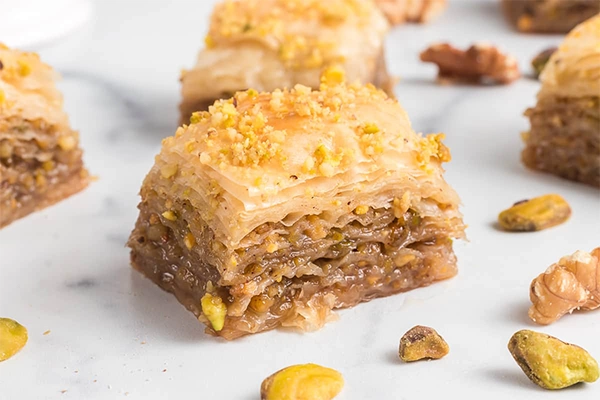
Baklava is a rich, sweet pastry made of layers of phyllo dough filled with chopped nuts and sweetened with syrup or honey. Its unique combination of textures and flavors has made it a staple in Middle Eastern, Balkan, and Central Asian cuisines. Beyond its delightful taste, baklava holds significant cultural importance. It’s often served at celebratory events and has traditionally been offered as a gesture of comfort and hospitality. The baklava recipe symbolizes more than just a dessert; it represents shared joy and cultural heritage in many societies. The art of making baklava requires skill and patience. The delicate phyllo sheets must be handled carefully, and the layering process demands precision. The result is a dessert that’s visually stunning, with its golden-brown top and visible layers when cut. The contrasting textures – crispy phyllo, crunchy nuts, and syrupy sweetness – create a sensory experience that has delighted food lovers for generations.
History of Baklava
The complete baklava recipe as we know it today has its roots in the Ottoman Empire. Invented in 1473 in the Topkapi Palace kitchens in Istanbul, baklava quickly became a favorite among Ottoman sultans. Its popularity spread throughout the empire, leading to numerous regional variations of the baklava recipe. Today, many countries in the Middle East, Eastern Mediterranean, Balkans, and Caucasus claim baklava as their national dessert. This geographical spread illustrates the profound influence of Ottoman culinary culture on its former territories. The evolution of the baklava recipe over centuries reflects changes in culinary techniques and available ingredients. Early versions may have used bread dough instead of the paper-thin phyllo we use today. The type of nuts used in the filling often depended on local availability – pistachios in Iran, walnuts in Greece, and almonds in Armenia. Interestingly, baklava was once considered a luxury dessert, reserved for the wealthy or for special occasions due to the cost of its ingredients. In the Ottoman Empire, it was even presented to the Janissaries (elite infantry units) every 15th of the month in a ceremonial procession called the “Baklava Alayı” (Baklava Parade).
Regional Variations of Arabic Baklava
The baklava recipe varies across different regions, each adding its unique touch:
– In Palestine and Syria, baklava is made with walnuts, sugar syrup, and phyllo dough, cut into small pieces.
– Azerbaijan’s “pakhlava” is popular during spring and Nowruz, made with walnuts and almonds.
– Armenian baklava includes cloves and cinnamon.
– Turkey’s Gaziantep and Azerbaijan’s Baku are renowned for their exceptional baklava.
Each region’s baklava recipe reflects local tastes and available ingredients. For instance, in some parts of Turkey, the syrup is flavored with rosewater, while in others, orange blossom water is preferred. The shape of the pastry can also vary – from the diamond-shaped pieces popular in Turkey to the bird’s nest shape found in some parts of the Levant.
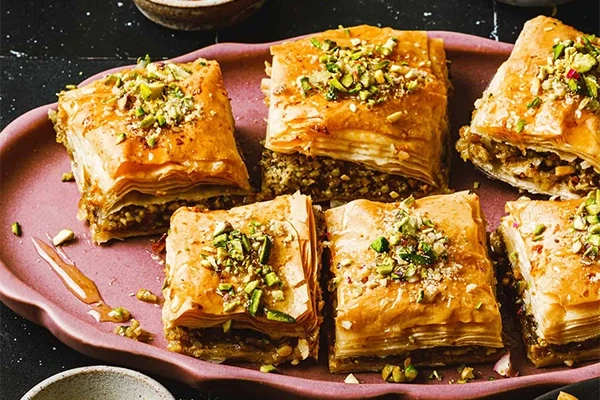
Greek baklava often uses honey in the syrup and is flavored with lemon or orange zest. In some recipes, a sprinkle of coarsely ground pistachios tops the dessert, adding both flavor and visual appeal.
History of Baklava in Iran
Iranian baklava recipes showcase remarkable diversity:
– Gilan province’s jasmine baklava infuses almonds with jasmine flowers.
– Qazvin’s rose-shaped baklava is crafted by rolling the dough into a rose shape before frying or baking.
These regional adaptations highlight how the baklava recipe has evolved into an art form, reflecting local tastes and cultural nuances. In Iran, baklava is often associated with Yazd, a city famous for its sweets. Yazdi baklava is typically made with almonds or pistachios and is known for its delicate flavor and texture. The city’s dry climate is said to contribute to the unique taste of its sweets, including its renowned baklava. Another interesting variation is the “Baklava-e Tabriz” from the northwestern city of Tabriz. This version is often made with a local walnut variety and is known for its rich, buttery taste.
Nutritional Aspects and Modern Adaptations of Baklava
While baklava is undoubtedly a treat, it’s worth considering its nutritional profile and how modern dietary trends have influenced the traditional baklava recipe.
Nutritional Content
A typical piece of baklava is rich in:
– Carbohydrates from the phyllo dough and syrup
– Healthy fats from nuts
– Proteins, also primarily from the nuts
– Various minerals like magnesium, potassium, and calcium
However, it’s also high in calories and sugar, making it a dessert to be enjoyed in moderation.
Modern Adaptations
As dietary preferences evolve, so too does the baklava recipe. Some modern variations include:
1. Vegan Baklava: Using plant-based butter and agave nectar instead of honey.
2. Gluten-Free Baklava: Substituting traditional phyllo with gluten-free alternatives.
3. Low-Sugar Baklava: Utilizing natural sweeteners or reducing the amount of syrup.
4. Raw Baklava: A no-bake version using dates, nuts, and coconut oil.
These adaptations allow more people to enjoy this classic dessert while catering to various dietary needs and preferences.
Conclusion
The enduring popularity of baklava demonstrates how a traditional dessert can evolve and thrive in the modern world. Its global recognition, celebrated on November 17th as World Baklava Day, is a testament to its cultural significance. For those looking to try their hand at a baklava recipe, quality ingredients are crucial. Fresh phyllo dough, premium nuts, and natural honey are essential for creating the best baklava. Whether you’re making it at home or enjoying store-bought varieties, baklava continues to be a beloved treat that connects us to centuries of culinary tradition. The journey of baklava from palace kitchens to global popularity is a testament to its irresistible charm. As we continue to adapt and reinvent the baklava recipe for modern tastes and dietary needs, we honor its rich history while ensuring its place in future culinary landscapes. Whether you prefer the traditional baklava recipe or one of its many variations, each bite offers a sweet connection to a shared cultural heritage that spans continents and centuries.